

Nutra (from nutraceuticals) is an affiliate marketing vertical that encompasses consumer goods designed for health, body care, and improving the quality of life. Most often, these include dietary supplements, weight-loss products, joint gels, potency remedies, anti-aging serums, and detox complexes.
The key difference between nutra and pharmacy pharmacology (pharma) is the absence of prescription requirements for sale. However, it is not classic e-commerce either, as there are no multi-page storefronts here.
Typically, the sales funnel for a specific product is built around one specific customer pain point. The potential buyer is literally led by the hand to the landing page where the CTA (Call to Action) is located.
Compared to other affiliate marketing verticals, nutra is one of the most reliable niches. This is entirely logical, as the demand for solving health or appearance issues does not depend on economic crises or seasons, and the audience of potential buyers is regularly replenished (people age and acquire health problems with enviable regularity).
How the Sales Funnel Works in Nutra
The sales funnel in nutra is a distributed model, where each stage serves a specific purpose (in some campaign flows, certain stages can be omitted or extra ones added).
The basic campaign flow (funnel) in nutra follows this structure:
Ad creative — to attract traffic
↓
Pre-lander (transit page) formatted as a news article or emotional storytelling — for warming up the audience and overcoming objections
↓
Offer landing page — filling out the lead form (name + phone number)
↓
Advertiser's call center — confirming the order over the phone
↓
Logistics and delivery — shipping the goods via mail/courier
The Path from a Click on a Creative to the Affiliate's Payout
In nutra affiliate marketing, traffic is almost never driven directly to the product page — a cold audience will simply close the tab featuring an unfamiliar cream or "magic" capsules. To convert an uninterested user into a buyer, a sales funnel is built (in affiliate marketing, this is concisely referred to as a flow or funnel). This is a chain consisting of targeting (context), an ad creative, a warm-up article (or story), and the final landing page.
Understanding the purpose of each component in this chain is a fundamental skill for a media buyer working with nutra. Any flaw in the chain (an overly aggressive teaser that contradicts the article's text, or a call center that is offline at night while the ad campaign is still running) decreases the overall conversion rate and drives the campaign ROI into the negative.
Let's break down each step of the journey from the first visual contact to the funds being credited to your balance.
Displaying the Creative
The user sees a teaser or a banner on an ad network (Facebook, Google, Yandex, etc.). Creatives in such teasers usually press on relieving a specific symptom or solving a specific problem ("Tired of aching knee pain?", "Your joints will stop hurting").
Transition to the Pre-lander
After clicking on the creative, the potential buyer lands on an intermediate transit page — this could be an interview with a specialist, a personal story of someone who solved their problem, or even a pseudo-news article (often disguising the pre-lander as a popular news outlet). The primary goal of such a pre-lander is to warm up a cold audience and convince them of the product's effectiveness.
Transition to the Landing Page and Lead Generation
If the user is interested in the product, they click a link (or button) leading to the final landing page, which showcases the product itself. Various conversion-boosting elements are utilized here, ranging from proof of product quality (certificates, commission endorsements, etc.) to marketing tactics like limited-time discounts, countdown timers, or displaying the number of customers who have already purchased the item.
To place an order, the customer doesn't need to provide payment details; all that is required is their name and phone number.
Operator's Call
Within 5 to 30 minutes after the order form is submitted, a call center agent contacts the customer. De jure, the affiliate's job ends at this stage.
From here, the seller directly steps into the game. As a rule, selling just one package is not profitable due to its low price, so the call center operator utilizes an upsell script (selling a multi-month course or a bundle instead of a single cream).
Approval
When the customer confirms their consent to receive the package, the advertiser sends a signal to the CPA network, and a fixed payout is credited to the affiliate's balance.
However, having the payout credited to the balance doesn't mean the affiliate can withdraw it immediately; first, the affiliate network must verify the traffic. The payout goes through two additional stages:
- Hold: Funds are frozen on the affiliate's balance for a specified period (ranging from 3 to 14 days). This is necessary for both the advertiser and the network to conduct initial traffic quality checks and filter out fraud.
- Unfreeze (Clearance): If the traffic is deemed clean, the funds become available for withdrawal to the affiliate's preferred payment systems.
Areas of Responsibility (Affiliate, CPA Network, and Advertiser)
- Advertiser — Creates the product, purchases ingredients, rents warehouses in the target country, sets up a native-speaking call center, and organizes courier delivery.
- CPA Network (Affiliate Network) — Acts as the guarantor of the deal. It handles technical integration (providing tracking links to the affiliate, monitoring the call quality of the advertiser's call center, preventing shaving/unjustified lead rejection, and paying out commissions to affiliates).
- Webmaster (Media Buyer) — Pays for advertising out of pocket, creates or sources the campaign flow (creative + pre-lander + landing page), and ensures a steady stream of targeted leads at a Cost Per Acquisition (CPA) lower than the network's payout. It is simple math — if a media buyer acquires leads at a cost higher than the affiliate network's payout, it will be unprofitable for them to source customers for these products.
Direct Advertiser vs. Affiliate Network — What to Choose at the Start?
When starting out, every affiliate faces the choice of who to work with:
- a direct advertiser
- an affiliate network
Both formats have pros and cons, but obviously, a lack of affiliate marketing experience can be far more critical when working directly compared to working with an affiliate network (which absorbs most of the risks).
The main advantage that draws affiliates to direct advertisers is the higher payout rate for a confirmed order, as there is no intermediary (CPA network) commission eating into the affiliate's total revenue.
However, not many advertisers are willing to babysit small traffic volumes (and driving massive volume right off the bat is foolish). Furthermore, if the advertiser experiences issues with inventory or delivery, the affiliate has to pause their ads, directly impacting their income. Obviously, a single direct advertiser cannot offer an affiliate a wide selection of GEOs and tools for converting cold audiences into leads.
For beginners, it is much safer to start through nutra affiliate networks. While the network will take a cut of the earnings as a commission, they offer a diverse roster of advertisers (protecting you from situations where an advertiser's call center goes down or inventory runs out). The affiliate can reroute traffic from one advertiser to another in literally one click (in exceptional cases, two).
Besides risk diversification, CPA networks provide affiliates with ready-made promo materials (landing pages, pre-landers, and teasers).
Types of Nutra (Categories, Seasonality, and Risks)
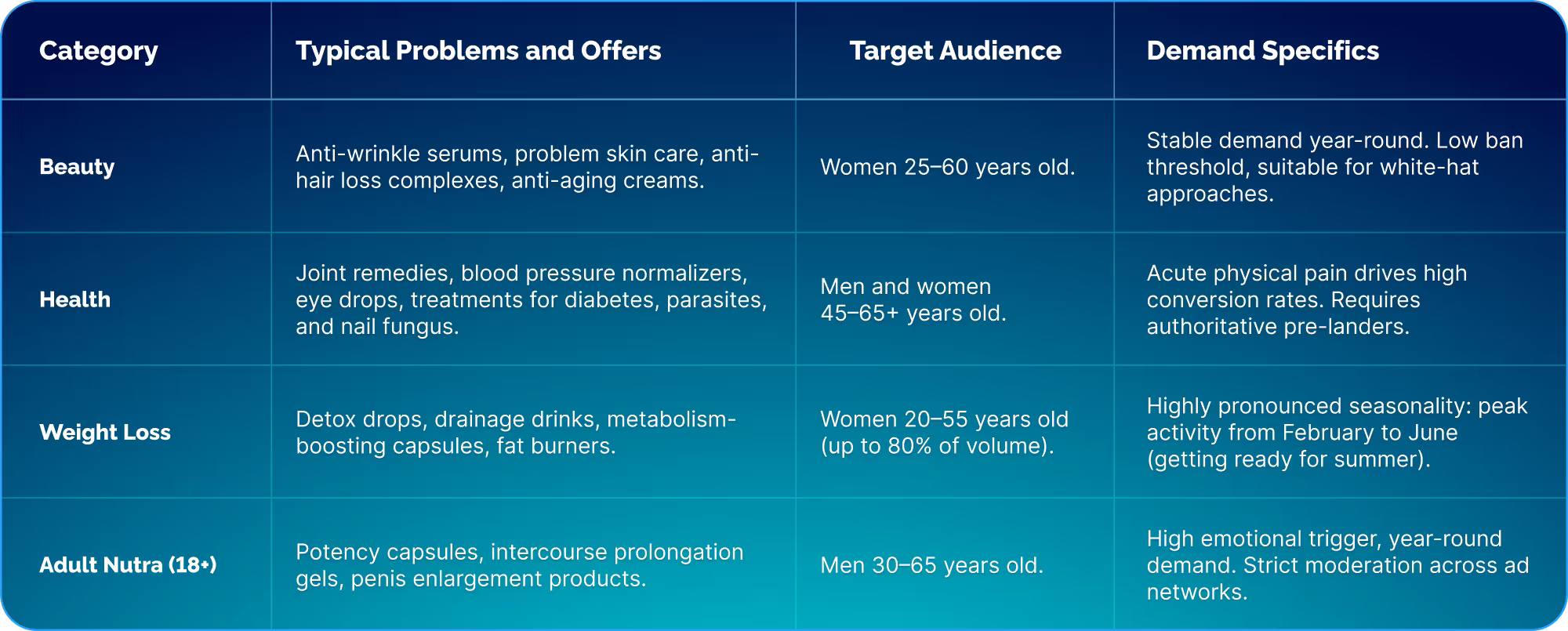
Nutra is an umbrella term for the vertical, which is internally divided into several categories depending on the problem they solve.
Each of these niches has its own specifics regarding the target audience and moderation threshold.
White-hat vs. Grey-hat Nutra
Working with nutra does not end with simply choosing the right offer; it is a multifaceted process with its own nuances, just like any other vertical.
A media buyer is not merely choosing a specific category (weight loss, joints, or cosmetics), but rather determining the level of marketing aggressiveness they will employ.
Let's not be hypocritical: in most cases, the jar of a "white-hat" skincare cream and a "grey-hat" anti-wrinkle remedy contain a very similar base formula made from botanical extracts. The difference lies entirely in what is promised to the buyer in the promo materials and the methods used to promote the offer.
In turn, the promotion method dictates the entire operational workflow:
- lifespan of ad accounts
- additional masking (cloaking)
- starting budget.
Nutra, like many verticals in affiliate marketing, can be white-hat, grey-hat, or black-hat (we will skip the latter in this article).
White-hat Nutra
The "color" of nutra is determined not only by the physical impact the supplements have on the customer's body (though this matters too), but also by how the advertising platforms where the media buyers run their ads treat these offers.
Generally, white-hat nutra includes:
- natural and certified skincare cosmetics;
- balms;
- anti-aging product lines;
- vitamins.
Promo materials for these products abstain from utilizing made-up diseases, aggressive guarantees, or medical dogmas. Such offers can be launched directly on Facebook, Google, and TikTok with minimal, if any, adjustments.
The downside of white-hat offers is obvious — lower conversion rates and moderate payouts. People are less eager to buy these products, but on the flip side, you don't have to compromise your conscience by selling placebos disguised as miracle pills.
Grey-hat Nutra
This is the nutra familiar to every Internet user. These are offers promising to cure hypertension, eliminate parasites, or shed excess weight in 7 days.
Here, clickbait creatives ("Doctors have been hiding this penny-worth remedy...") and aggressive user warm-ups via storytelling on pre-landers come into play. Conversion rates on these pages are exponentially higher than on white-hat ones, but ad platforms heavily penalize and ban accounts promoting such offers.
Nutra affiliate marketing revolves strictly around proper marketing packaging and sales psychology. A webmaster shouldn't try to play the role of a licensed physician or make personal medical guarantees. It is crucial to remember that violating advertising laws and making false claims about guaranteed cures carry administrative and legal risks.
Financial Operational Models (COD, SS, and Trials)
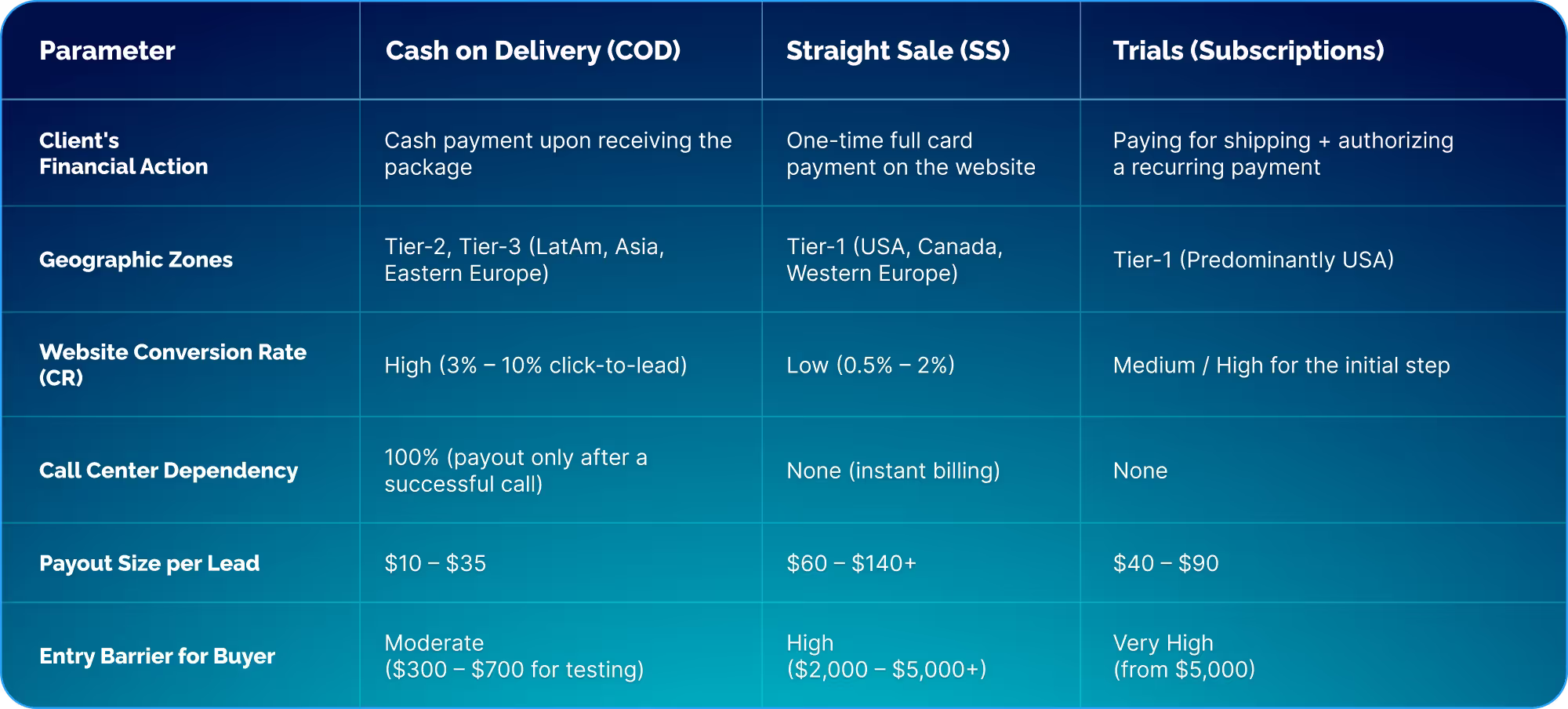
Since nutra offers involve the physical delivery of goods to the buyer (client), all advertisers operate on one of three payout models (the model dictates exactly when the affiliate receives their commission for an acquired customer):
- Cash on Delivery (COD);
- Straight Sale / Prepayment (SS);
- Subscription (Trials).
Cash on Delivery (COD) — The classic "pay upon receipt" model
The COD model dominates in the CIS region, Latin America (Tier-2), Asia, and Africa (Tier-3).
The mechanics of COD are identical to the standard online shopping method we are all used to. The user orders the product without paying upfront and settles the bill in cash with the courier or upon picking up the package at the local post office or delivery hub.
- Pros: Very high conversion rates at the landing page form stage. Users easily leave their contact details when they realize they bear no immediate financial risk by hitting "submit".
- Cons: Heavy reliance on the human factor. If the call center is lagging and takes too long to call back, the customer has time to change their mind. If the shipping process is slow, the return rate (unredeemed packages) spikes, prompting the advertiser to slash payout rates or disable the offer entirely for you.
Straight Sale (Prepayment) and Trials (Subscription)
If the offer is promoted in developed markets with a strong digital banking culture (USA, Canada, UK, Western Europe), users do not shy away from upfront payments, as they are used to this financial flow in other e-commerce sectors.
- Straight Sale (SS): From a payout size perspective, this is the most lucrative model. The user enters their credit card details directly on the landing page and pays for the product immediately. The affiliate is paid instantly upon a successful transaction.
- Subscription Model (Trials): The user is offered a free trial package of the product, paying only a nominal shipping fee ($1.99–$4.99). However, the fine print often includes their consent to a recurring monthly subscription (auto-billing $50–$90 after 14 days); sometimes these terms are stated more explicitly, but in those cases, the conversion rate drops.
What the Economy of a Nutra Campaign Flow Really Consists Of
The ultimate mistake novice media buyers make is judging an offer's appeal solely by its payout rate (CPA). In nutra affiliate marketing, a nominal payout is practically meaningless without factoring in the lead processing quality.
Profitability Terminology
To speak the same language as an advertiser or affiliate network, you must understand nutra terminology (which also applies to other verticals).
- Lead — The initial application containing contact details that enters the affiliate network's tracker (or the direct advertiser's CRM).
- Approval Rate — The percentage of confirmed orders out of the total registered leads. The formula is: (Confirmed Leads / (All Leads - Trash)) × 100%.
- Trash — Garbage submissions filtered out by the system upon entry to avoid clogging the lead pipeline (non-existent numbers, duplicates, incorrect area codes, test forms). Trash leads are unpaid and are excluded from the approval rate calculation by honest networks.
- Reject (Declined Leads) — Leads where the call center reached the customer, but the customer refused to buy ("I changed my mind", "it's too expensive", "I clicked by accident").
- Hold — The period during which funds are frozen on your balance before withdrawal (3 to 14 days). Networks mandate a hold period to verify traffic quality and check for fraud.
A Visual Calculation, or Why $20 Can Be More Profitable Than $35
We could spend hours explaining why an offer with a lower payout might be more lucrative, but let's just look at two real-world examples and break down how nutra economics actually work.
Offer A (High Payout, Weak Call Center)
- Payout per confirmed order: $35
- Real Approval Rate: 20%
- Leads generated: 100
- Confirmed orders: 100 x 0.20 = 20 units
- Affiliate's Revenue: 20 x 35 = $700
Offer B (Moderate Payout, Professional Call Center)
- Payout per confirmed order: $20
- Real Approval Rate: 50%
- Leads generated: 100
- Confirmed orders: 100 x 0.50 = 50 units
- Affiliate's Revenue: 50 x 20 = $1000
Result: Thanks to robust closing tactics and stable operators, the offer with the lower nominal payout yields $300 (42.8%) more net profit from the exact same volume of incoming traffic.
Assessing Campaign Viability (EPC and Allowable CPC Formulas)
When a beginner affiliate logs into a network's dashboard, they are often met with confusing acronyms and metrics that can be intimidating at first. However, once you grasp them, they become your most reliable allies.
Knowing how to read these metrics is crucial. Let's break down the two most important ones:
- EPC (Earnings Per Click);
- CPC (Cost Per Click).
EPC is calculated to ensure the campaign flow doesn't run at a loss, using this formula: EPC = Total Revenue / Total Clicks.
A campaign flow is considered viable and profitable only if the CPC is lower than the EPC: CPC < EPC => ROI > 0%.
If a click on Facebook costs you $0.15, but your estimated campaign EPC is $0.12, your ad campaign is generating a 20% loss on every click, regardless of the overall traffic volume.
Where to Drive Traffic From: Sources and Entry Barriers
Solid earnings in nutra rely heavily on choosing the right traffic source. Certain traffic sources can be highly successful (or utterly disastrous) depending on whether the offer is white-hat or grey-hat.
Facebook and Instagram (Meta)
Historically, FB and Instagram supply the bulk of the world's nutra traffic volume.
- Advantages: High density of solvent audiences, advanced retargeting tools, and granular targeting capabilities based on specific age groups and geolocation segments.
- Barriers: Nutra borders on restricted content (with some offers being explicitly prohibited from advertising). Running these offers inevitably results in permanent ad account bans. Driving traffic here mandates robust infrastructure (cloaking services, anti-detect browsers, proxies) and farming or purchasing accounts, heavily inflating operational costs.
Google Ads and Yandex Direct (Search Context)
Classic search advertising targeting users who understand the offer.
- Advantages: Ultra-hot traffic, as the user is actively searching for specific solutions to their problem and is ready to buy. Lead-to-approval conversion rates peak here compared to any other source.
- Barriers: Extremely brutal automated landing page scoring by Google or Yandex. Any mismatch between the "white page" shown to the moderator bot and the actual landing page shown to the user results in instant domain and payment profile bans. Working with Google and Yandex is much tougher than with other sources and also requires advanced cloaking infrastructure.
Teaser (Native) Ad Networks
Unlike Facebook or Google, which display ads mostly within their own ecosystems (though Google Display Network utilizes third-party sites), teaser networks lease ad space on external platforms (news aggregators, blogs, forums, entertainment portals).
Teaser networks are considered the perfect ecosystem for senior demographic offers (joints, hypertension, vision, parasites).
- Advantages: Highly lenient moderation compared to social media, allowing the use of news-format creatives and classic shock content.
- Barriers: A massive influx of low-quality placements and bot traffic. A beginner needs a sizable budget ($300–$500) just to filter out non-converting sites and build a custom Blacklist.
Push Notifications and In-Page Formats
Delivering brief web notifications directly to users' mobile and desktop devices. While the golden age of push traffic is long gone, it still survives as a viable traffic channel.
- Advantages: Dirt-cheap CPCs ($0.005–$0.03 depending on the GEO) and lightning-fast campaign launches with zero risk of account bans. It serves as a great sandbox for beginners to learn the ropes and test adult offers (potency, men's health products).
- Barriers: Ad blindness; audiences quickly grow immune to notifications. Conversion rates plummet over time, and creatives burn out and require refreshing every 2–3 days.
How to Choose a Nutra Offer for a Beginner
Before depositing funds into an ad network and launching test campaigns, take the time to ask your affiliate manager for specific offer parameters, namely:
- Call Center Schedule (24/7 or Local Hours): If you are running traffic from Europe to Latin America and the local call center operates strictly from 09:00 to 18:00 local time, you risk dumping your night leads into the void.
- Fresh Approval Stats for the Last 7–14 Days: Never rely on the historical lifetime approval rate as your north star; offer cards often display an inflated, promotional 45–50%. Demand stats strictly filtered by your specific traffic source over the past week or two.
- Landing Page Localization Quality: Pre-lander copy must be proofread by a native speaker who understands local dialects and cultural mentalities. Machine or AI translations output unnatural phrasing, destroying audience trust and, consequently, conversion rates.
- Daily Limit (Cap): Ask how many leads per day the advertiser can consistently process without creating a bottleneck. If you blast 200 leads but the real daily cap is 50, 150 leads will sit in a queue and eventually move to "Rejected" because their processing time exceeds 24+ hours.
- Hold Periods and Thresholds: For novice affiliates, the standard hold period for the first payout is 7 to 14 days. Calculate your budget in advance to ensure you have enough working capital to sustain your ad campaigns until you can withdraw your first profits.
Typical Mistakes of Novice Affiliates in Nutra
Naturally, everyone wants a copy-paste guide to start printing money instantly, but affiliate marketing is a living, breathing ecosystem that constantly evolves. What converted perfectly yesterday might yield zero ROI today.
Let's dissect the most common mistakes webmasters make.
- Ignoring the Target GEO's Time Zones: When a media buyer launches a campaign without adjusting for the users' time zone (which is exactly why ad scheduling exists, yet beginners ignore it), the risk of burning the budget skyrockets. If you buy traffic at night while call center agents are offline, up to 70% of those leads will simply ignore the phone when the center finally calls back the next day.
- Blindly Copying Creatives from SPY Services: The accessibility of spy tools that monitor competitors' ads can backfire terribly. It feels like you found the ultimate working flow—just rip and run. However, the flows spinning on spy tools are usually 2-3 weeks old and are thoroughly burned out by competitors. Spy tool assets should be treated strictly as inspiration vectors; you must always redesign the visuals and rewrite the headlines.
- Failing to Account for Operational (Infrastructure) Costs: Beginners typically calculate their ROI using a flawed formula: Network Payout − Ad Spend = Net Profit.
In the reality of nutra operations, you must factor in an additional $100–$200 monthly for consumables (tracking software, anti-detect browsers, proxies, and domain names).
Conclusion
The nutra vertical is not a lottery or a get-rich-quick scheme; it is a highly operational business rooted in consumer psychology and data analytics. You can generate consistent profits here if you know how to decompose metrics, relentlessly test new angles, and meticulously calculate your unit economics while factoring in all operational overhead.